What This Infographic Shows
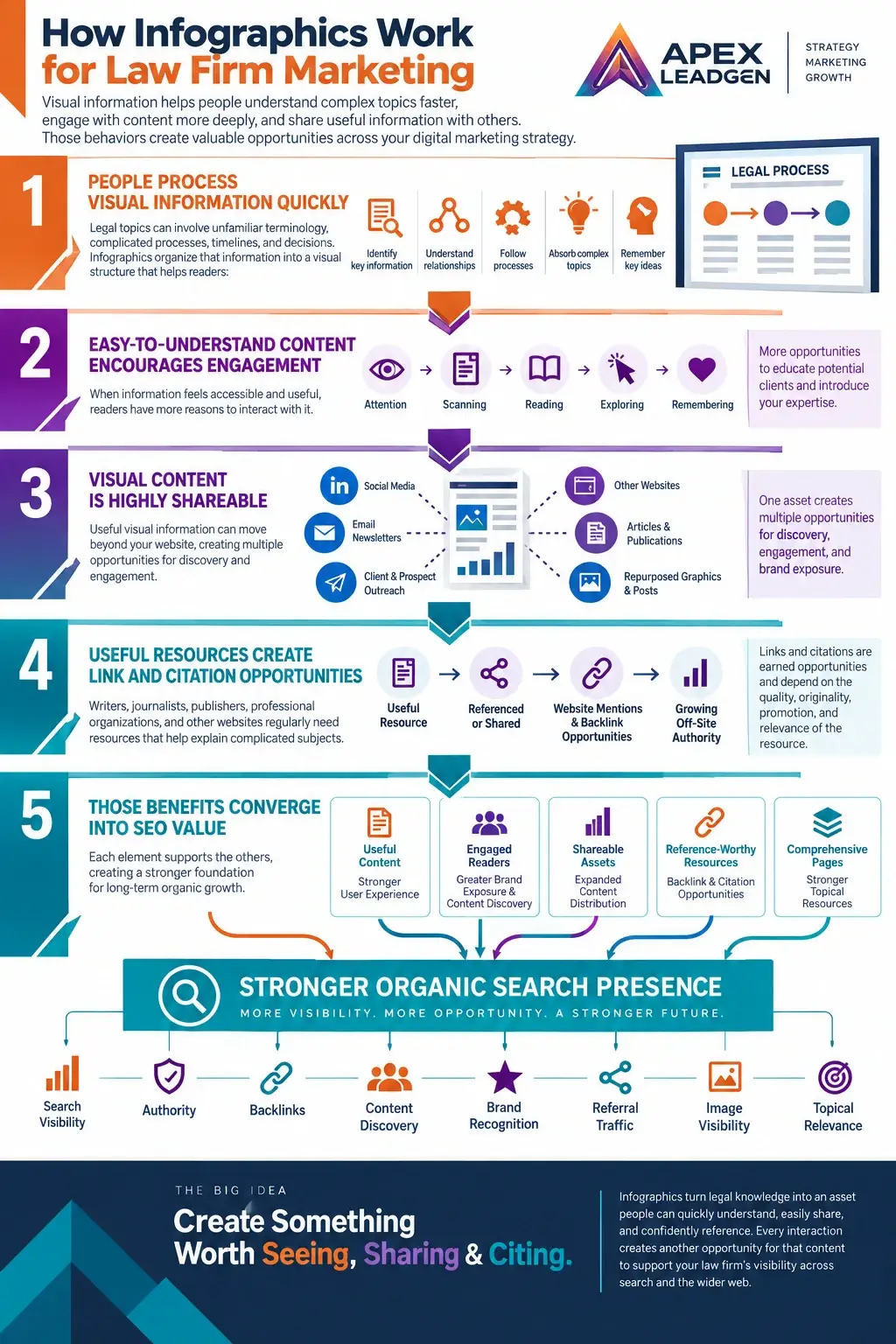
For those using screen readers or prefer to read: This infographic illustrates how visual content can support a law firm’s broader digital marketing and SEO strategy. Infographics organize complex legal information into a format that can make processes, timelines, relationships, and key concepts easier to understand and remember.
Complex Information → Better Understanding → More Engagement → More Sharing → Links & Citations → Stronger Search Presence
When legal information is easier to understand, people have more opportunities to engage with it by reading, exploring related content, learning about the firm’s services, or returning to the resource later. Useful visual content is also highly shareable and can be distributed through social media, email, outreach, articles, websites, and smaller repurposed graphics.
As an infographic reaches a wider audience, it can also create opportunities for other websites, journalists, publishers, and professional organizations to reference the resource. High-quality, original resources may earn website mentions, backlinks, and citations that contribute to a law firm’s off-site authority.
Together, these effects can support several areas of organic marketing:
- User Experience: Makes complicated legal information easier to navigate, process, and understand.
- Content Discovery: Creates additional ways for potential clients and other audiences to discover the firm’s content.
- Content Distribution: Provides a versatile asset that can be shared through social media, email, outreach, articles, and other channels.
- Backlinks & Citations: Gives other websites and publishers a useful resource they may choose to reference, cite, or link to.
- Brand Recognition: Repeated exposure to useful, recognizable content can increase awareness of the law firm and its expertise.
- Referral Traffic: Shares, mentions, citations, and links can introduce new visitors to the firm’s website.
- Topical Relevance: Visual resources can contribute to more comprehensive coverage of important legal topics.
- Image Visibility: An optimized infographic provides an additional visual asset that search engines can discover and associate with the topic.
These benefits ultimately converge around a larger goal: a stronger organic search presence built through useful content, greater visibility, broader distribution, and resources that people have reasons to see, share, and cite.